How to take care of Neon Tetra Fish?
We have seen this tropical species so common in any aquarium, and we have even had it in our homes. Neon Tetra fish are one of the bestsellers in the world; its dazzling colors, its calm behavior, its easy care and its low cost, make it a fish that everyone wants to have. For all those who are starting out in the world of aquarium hobby, the Neon Tetra fish is one of the best options. Next, we will have more details about what this species is like and how we can keep them healthy, strong and happy.
Characteristics of Neon Tetra Fish
- Scientific name. It corresponds to the name Paracheirodon innesi or Hyphessobrycon innesi , from the characin family, related to the dreaded piranhas and is often confused with the Chinese neon fish.
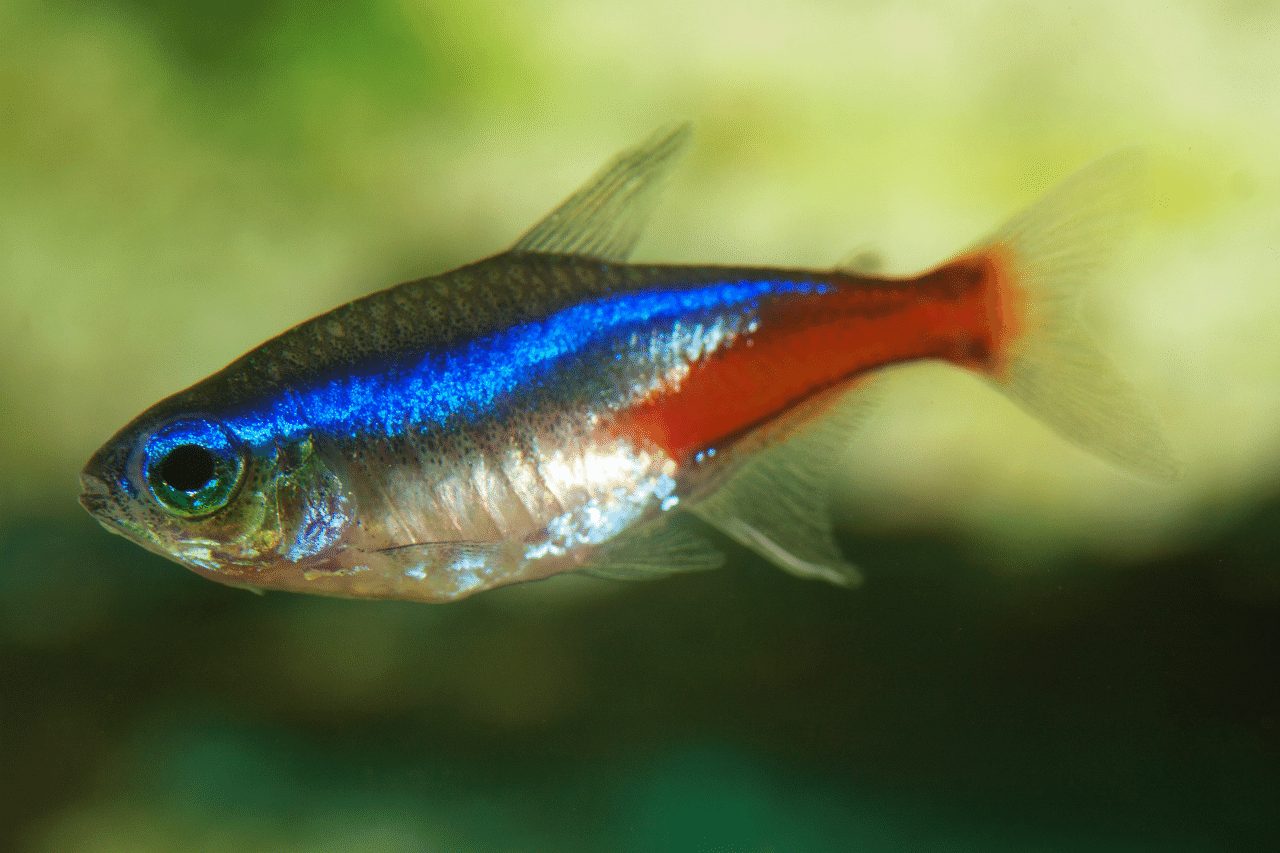
- An unmistakable flash . In the first place, what will most attract our attention to the Neon fish is its magnificent and brilliant color in red and blue tones . These chromatic reflections allow them to see each other when they are in murky waters. However, as a curious fact, when they feel threatened, sleeping or even sick, they "turn off" and become transparent.
- Small but showy. Its size is 4 cm at most, the females are even smaller and the body is more curved, although if a male Neon fish has overdone its food, it can be mistaken for a female Neon fish.
- Sociable and tolerant . It adapts perfectly to living with other species. His calm and peaceful attitude makes coexistence much easier. For them to be in their best conditions, the ideal is to create groups of 8 or 10 Tetra Neon fish that include males and females. In this way, we will achieve a greater sensation of naturalness. They are perfect for a community aquarium .
- The Neon Tetra fish is resistance. This fish normally lives 8 years in wild waters, however in an aquarium it is reduced to 5 years, which is not little. eye! You have to take into account your tendency to get white spot disease, it affects your intestines and damages your muscles, creating cysts that are called white spots. If so, it is best to remove the affected fish from the aquarium so as not to harm the rest of the fish.
Habitat of the Neon Tetra fish
The origin of this aquatic pet comes from South America, they live in temperate or even warm rivers, having a greater presence in the Amazon River basin. As we have pointed out before, its striking colors help it to detect its peers in these murky waters.
If you are thinking of having this magnificent species in your aquarium, we will tell you some tips to keep in mind to create the most natural environment possible so that these little ones feel at home and ensure that they do not get stressed.
- Even if they are small, keep in an appropriate aquarium . The Neon fish does not require a very large space, however, let's not forget that it usually lives in a group and needs space. With 50 or 60 liters it would be ideal so that you can swim at your leisure.
- Delicate with the state of the water . The size of the tank is important, not only for reasons of space but also so that a correct water cycling process can be established.
- Avoiding diseases in the Neon Tetra fish is possible if we maintain a slightly acidic habitat with a pH between 5 and 7.
- It likes soft and warm water , for this it is essential to check the source and have a heater in the aquarium. Its suitable temperature is between 21 and 27ºC.
- low light With their resplendent colors they have enough. Having a lot of light causes them stress and it can turn off.
- Simple filter, since they produce very little biological load, powerful filtering is not necessary. Important! being so small, there is a risk that it may be caught by the filter of the fish tank, to avoid any disaster, we can slightly cover the filter with a mesh.
- Lots of green vegetation. For the decoration of the tank, the presence of plants and branches is essential to give it a greater naturalness. On the other hand, we can add elements that provide them with shade or even so that they can hide, such as pebbles.
How is the feeding of a Neon Tetra Fish?
They are omnivorous fish, and it is recommended that they eat three times a day. We must bear in mind that we are dealing with a fish with a reduced size and the amount of food has to be proportional, we must not overdo it.
- It is not special in food , it is a very grateful fish that can eat both live and dry food. He also likes lettuce and mosquito larvae, we can include them in his diet without any problem.
- Color enhancing foods . There are food products on the market that help these fish to have a colorful, bright and healthy appearance.


Comments
Post a Comment